White rooster
waits beneath roots,
only roosters here,
no hens anywhere.

New Smyrna Beach, Florida

A collection of photos and poems interacting with each other in ways both mysterious and obvious.
White rooster
waits beneath roots,
only roosters here,
no hens anywhere.
New Smyrna Beach, Florida
three pumps
still there
red
yellow
white
doors shut
gasoline
days done
power lines
slash across
cloud-strewn sky
the shell
suggesting
gasoline
nothing moving
only
the quiet
of something
that used to
happen
here
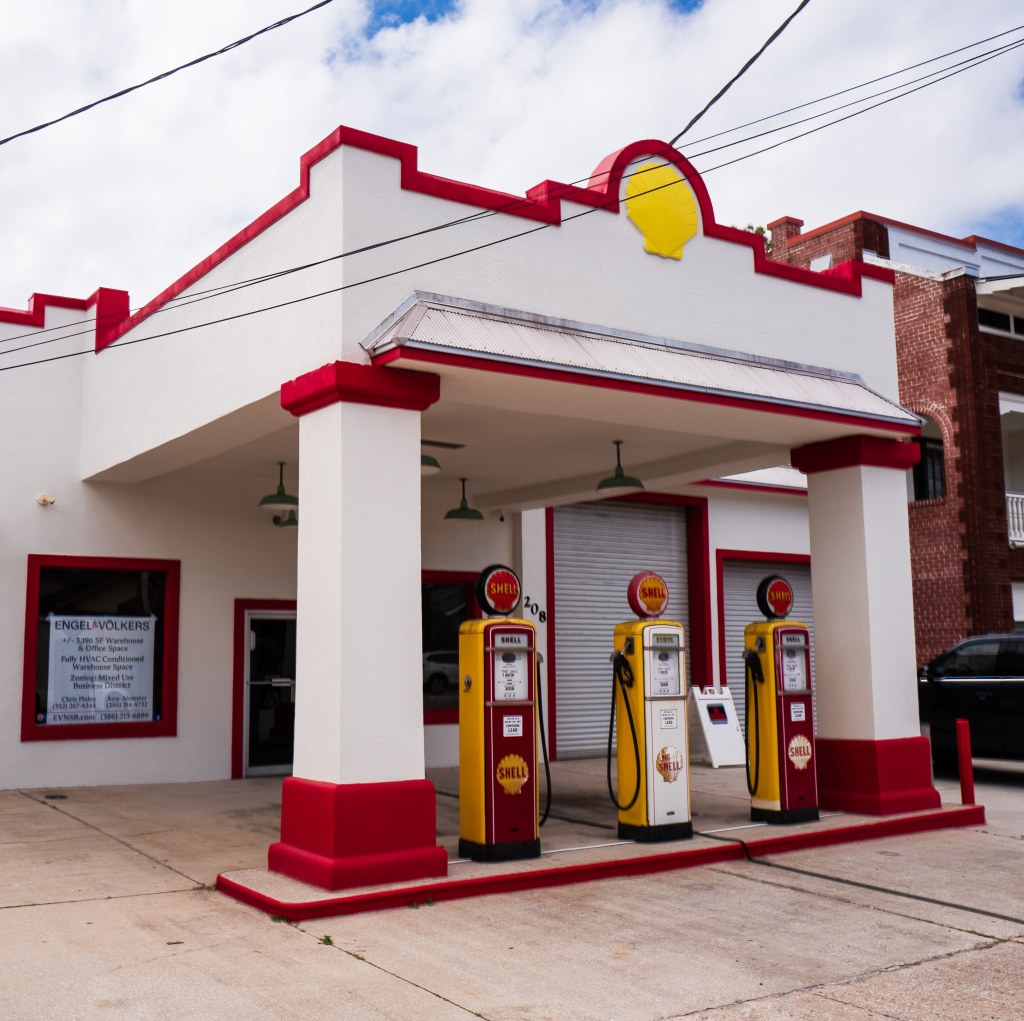
New Smyrna Beach, Florida
hazy morning
sand lifted
into a small dune
a blue
tricycle
one wheel
turned
toward
the ocean
we cannot see
yellow
tower
red
pavilion
nothing moving
the beach
holding
its breath

New Smyrna Beach, Florida
I came,
I saw,
I was conquered.
The world
incomparably richer
than anything I had been taught.
Africa does not exist —
only poverty,
only dignity,
only abandonment,
only endurance.
The malaria mosquito
decided history.
The desert
teaches humility.
Independence brought
responsibility.
Colonialism left behind
borders,
habits of thought,
fear
that travels faster
than wind.
A crowd
is a separate being.
The traveler
discovers himself
only when he loses his way.
Time
has a different density.
The problem is not only poverty,
but the absence of choice.
The reporter
must be quiet enough
to hear
what is not being said.
The world
is not a rational place.
The greater the poverty,
the greater the need
for dignity.
Patience
is a form of intelligence.
I came.
I saw.
I was conquered.
These words and phrases were gathered from the Polish writer and journalist Kapuściński’s The Shadow of the Sun, a collection of journalistic accounts and essays during his travels in Africa.

Hohoe, VR, Ghana
The studio became part of the composition.
Not chaos —
direction.
Rhythm moved to the center
and stayed there,
low and circular,
like a thought that won’t resolve.
Texture replaced harmonic motion.
Improvisation was collective —
no one stepping out front,
just currents crossing currents.
Electric sound opened new space.
Tape hiss.
A razor blade lifting silence
and laying it somewhere else.
The music mirrors its historical moment —
voltage in the air,
streets unsettled,
nothing wanting to close.
Davis was always listening forward.
Jazz did not end here.
It changed.
And in the change
pulse overtook certainty,
groove kept widening,
and the lights in the control room
burned past midnight
while the future assembled itself
from fragments.
And listening changed too —
no more waiting for the solo to arrive
like a clean answer.
You had to lean in,
stay inside the weather,
let repetition become hypnosis,
let ambiguity breathe.
The listener became part of the mix,
not solving the music
but entering it —
finding meaning in the mystery of the world,
holding the pulse
until it began to reveal
what it never intended to explain.
This is a found poem composed from words and ideas from Miles Davis’ Bitches Brew by George Grella Jr. Feel free to share your experiences with this masterpiece of modern music.
I’ve never trusted the loud surface of things,
the noise beyond the headlines
hijacking my attention.
I turn instead toward the weather inside the weather,
light breaking out of its own shadow,
a chord held longer than it should be,
almost refusing to resolve.
I wait for the hush after the ferry horn
when the harbor keeps breathing anyway.
Kapuśińki walking through Accra dust —
not filing copy, listening.
Noir light slipping through blinds,
everybody marked, nobody simple.
Deep thinking feels like this palm at night —
fronds flaring out of blackness,
structure rising from dark without announcement.
At this age I resist the easy answer.
I grow outward into depth.
Ambition has fallen away.
What remains is home.

St. Simons Island, Georgia
Light names one side.
Shadow names the other.
The corner offers no opinion.
At the line—
no ground given.
What seems to separate
holds.
What seems to block
shows.
Before meaning arrives
blue is already unbroken.

Pooler, Georgia
The arrow points left,
black on yellow,
a direction offered at night.
If I turn, I turn.
If I don’t, I don’t.
Either way the sign stays put,
the night stays quiet—
only this moment needs attention.
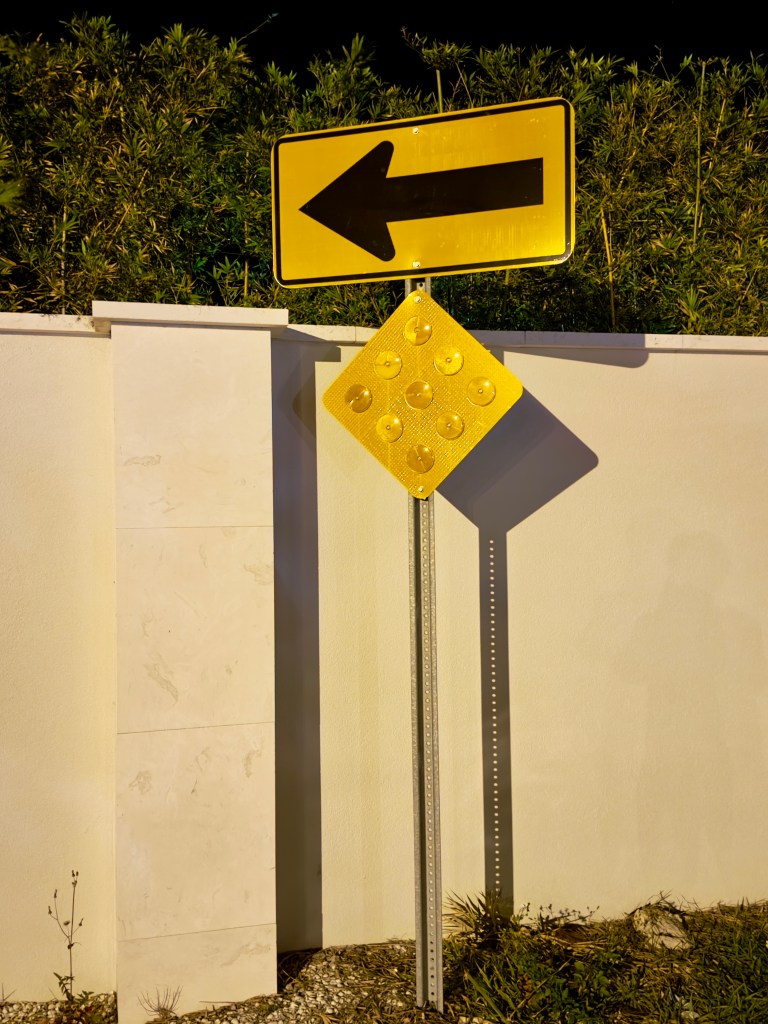
New Smyrna Beach, Florida
It was the night after Depth Charge Challenge—
left him on his knees,
riding the porcelain chariot,
begging for mercy.
Tonight he was taking it easy.
His crew was copacetic—
Mingo’s facial wounds,
another casualty of the Challenge,
were healing fine,
superficial, leaving no scars.
And Toons was stringing together
three weeks of medicated calm,
staying straight
with Diet Pepsi and maraschino cherries,
working the Karaoke machine
like a gearhead in overdrive.
That gave Benny the freedom
to shift his attention to Savannah.
Available again,
and sadly celibate,
Benny had a crush brewing
on the new waitress at the Mumbling Walrus.
He’d never known a Southern gal—
that’s how she described herself—
and was captivated by Savannah:
the slow syrup of her Georgia roots,
the country twang in her hello,
the way she put herself together—
just enough makeup to suggest
she was from somewhere else—
red cowboy boots with tooled eagle wings,
a perky denim blouse, a pleated skirt
that skimmed her dimpled, almost-zaftig knees,
the tattooed snake coiled
around her inoculation scar,
her proper manners and flirtatious ways.
Damn, what’s not to like?
Savannah made Benny feel
like he was the most important guy at the bar,
that his order carried
the weight of global significance.
Benny was smitten.
He couldn’t take his eyes off her—
tracked her as she waited tables,
taking trips to the sandbox
(her word for the ladies’ room),
Benny was smitten.
He couldn’t take his eyes off her—
tracked her as she waited tables,
taking trips to the sandbox
(her word for the ladies’ room),
while he rehearsed the courage to say anything
besides Pabst Blue Ribbon.
When he lost sight of her,
he drank faster—
hoping she’d circle back,
talk sweet, and bring him
another beer.
It never crossed Benny’s mind
that her warmth was the job,
not the girl,
that she was working for tips.
But Toons knew—
hell, everybody in the place knew—
and feeling sorry for his buddy,
he climbed on stage
to make a point,
dedicating the next song to Benny.
He shook that wild red mane,
face twisted in the blues
of unrequited love,
and spat out the lyrics:
Oh what’s love got to do, got to do with it
What’s love but a second-hand emotion
What’s love got to do, got to do with it
Who needs a heart
When a heart can be broken.
The chorus hit again,
and Benny felt his name inside the words.
He knew then he was snakebit—
made a hasty exit,
leaving a handful of crumpled bills
on the table.
Out in the parking lot,
he could still hear Toons
howling through the chorus—
a voice cracked but faithful
to the last note.
Benny stood under the buzzing light,
a gentle shower blurring the neon sign,
thinking maybe love
was just another song
someone else had to sing.
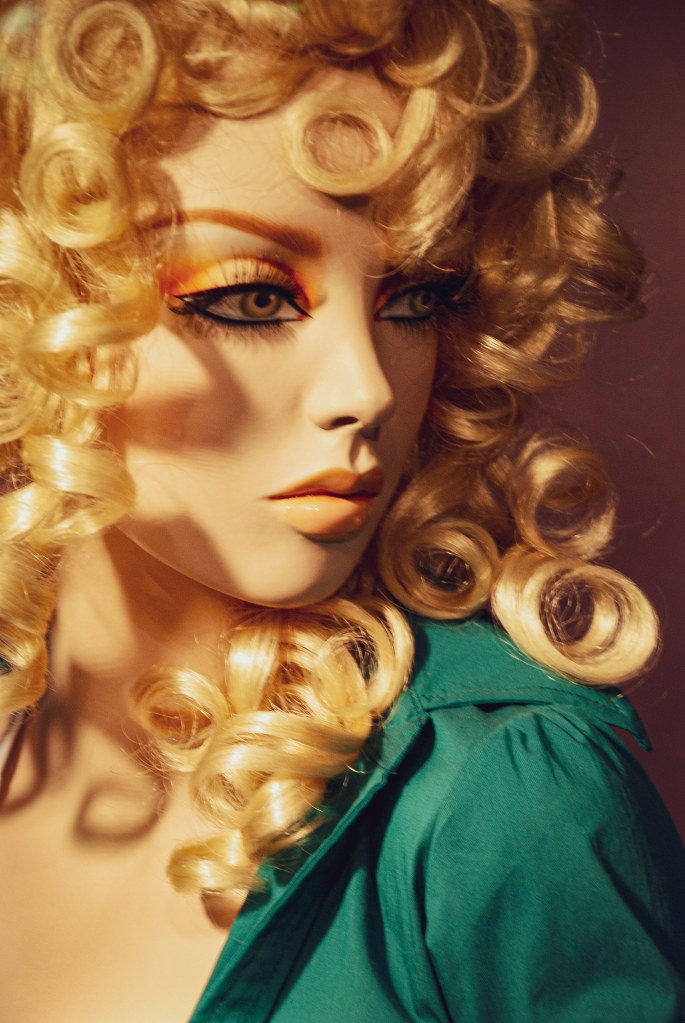
Quebec City, Canada
The door pushes back with a soft groan,
and the air is sugared brine,
half bakery, half tidepool.

Glass lamps shaped like jellyfish hang above,

their glow steady, not quite natural.

The menu glints in chalk dust,

part joke, part warning,

a dare scrawled in sugar.

House Specialties — Today Only:

Seaweed & Salted Caramel Ripple -

kelp flakes tangled into sticky sweetness.

Beetroot & Black Garlic Glazed -

a purple-red bite with a shadow of earth.

Turmeric Pineapple Fire Ring -

golden heat meeting citrus sting.

Lavender Pickle Surprise -

floral calm ambushed by brine.

Sardine & Lemon Zest Cruller -

ocean breeze with a citrus slap.

Charcoal & Hibiscus Swirl -

ash-black dough bleeding crimson bloom.

Avocado & Wasabi Glazed Twist -

creamy green mellow, then the nose-burn.

Rosemary Grapefruit Crunch -

bitter pith under sharp pine needles.

Miso Maple Bar -

savory umami wrapped in tree sugar.

Dandelion Honey Puff -

a meadow fried into golden fluff.

Pumpkin Kimchi Knot -

spicy funk bound in autumn orange.

Cactus Pear & Chili Powder Jelly-Fill -

sweet desert sting at the heart.

And at the end of the counter,

a glass case with a handwritten sign:

Plain donuts — sold out.

Juneau, Alaska
 Boho Dreams of Space and Time