


A collection of photos and poems interacting with each other in ways both mysterious and obvious.
It was the night after Depth Charge Challenge—
left him on his knees,
riding the porcelain chariot,
begging for mercy.
Tonight he was taking it easy.
His crew was copacetic—
Mingo’s facial wounds,
another casualty of the Challenge,
were healing fine,
superficial, leaving no scars.
And Toons was stringing together
three weeks of medicated calm,
staying straight
with Diet Pepsi and maraschino cherries,
working the Karaoke machine
like a gearhead in overdrive.
That gave Benny the freedom
to shift his attention to Savannah.
Available again,
and sadly celibate,
Benny had a crush brewing
on the new waitress at the Mumbling Walrus.
He’d never known a Southern gal—
that’s how she described herself—
and was captivated by Savannah:
the slow syrup of her Georgia roots,
the country twang in her hello,
the way she put herself together—
just enough makeup to suggest
she was from somewhere else—
red cowboy boots with tooled eagle wings,
a perky denim blouse, a pleated skirt
that skimmed her dimpled, almost-zaftig knees,
the tattooed snake coiled
around her inoculation scar,
her proper manners and flirtatious ways.
Damn, what’s not to like?
Savannah made Benny feel
like he was the most important guy at the bar,
that his order carried
the weight of global significance.
Benny was smitten.
He couldn’t take his eyes off her—
tracked her as she waited tables,
taking trips to the sandbox
(her word for the ladies’ room),
Benny was smitten.
He couldn’t take his eyes off her—
tracked her as she waited tables,
taking trips to the sandbox
(her word for the ladies’ room),
while he rehearsed the courage to say anything
besides Pabst Blue Ribbon.
When he lost sight of her,
he drank faster—
hoping she’d circle back,
talk sweet, and bring him
another beer.
It never crossed Benny’s mind
that her warmth was the job,
not the girl,
that she was working for tips.
But Toons knew—
hell, everybody in the place knew—
and feeling sorry for his buddy,
he climbed on stage
to make a point,
dedicating the next song to Benny.
He shook that wild red mane,
face twisted in the blues
of unrequited love,
and spat out the lyrics:
Oh what’s love got to do, got to do with it
What’s love but a second-hand emotion
What’s love got to do, got to do with it
Who needs a heart
When a heart can be broken.
The chorus hit again,
and Benny felt his name inside the words.
He knew then he was snakebit—
made a hasty exit,
leaving a handful of crumpled bills
on the table.
Out in the parking lot,
he could still hear Toons
howling through the chorus—
a voice cracked but faithful
to the last note.
Benny stood under the buzzing light,
a gentle shower blurring the neon sign,
thinking maybe love
was just another song
someone else had to sing.
Quebec City, Canada


The door pushes back with a soft groan,
and the air is sugared brine,
half bakery, half tidepool.

Glass lamps shaped like jellyfish hang above,

their glow steady, not quite natural.

The menu glints in chalk dust,

part joke, part warning,

a dare scrawled in sugar.

House Specialties — Today Only:

Seaweed & Salted Caramel Ripple -

kelp flakes tangled into sticky sweetness.

Beetroot & Black Garlic Glazed -

a purple-red bite with a shadow of earth.

Turmeric Pineapple Fire Ring -

golden heat meeting citrus sting.

Lavender Pickle Surprise -

floral calm ambushed by brine.

Sardine & Lemon Zest Cruller -

ocean breeze with a citrus slap.

Charcoal & Hibiscus Swirl -

ash-black dough bleeding crimson bloom.

Avocado & Wasabi Glazed Twist -

creamy green mellow, then the nose-burn.

Rosemary Grapefruit Crunch -

bitter pith under sharp pine needles.

Miso Maple Bar -

savory umami wrapped in tree sugar.

Dandelion Honey Puff -

a meadow fried into golden fluff.

Pumpkin Kimchi Knot -

spicy funk bound in autumn orange.

Cactus Pear & Chili Powder Jelly-Fill -

sweet desert sting at the heart.

And at the end of the counter,

a glass case with a handwritten sign:

Plain donuts — sold out.

Juneau, Alaska
Ghost glove of the cosmos
stuck on the window of eternity
like a lost kite tangled in its knotted tail,
lonely semaphore of the star-drunk night.

What are you doing here?

Signaling a mail truck from Mars?

Chasing rubber checks through Northern Lights?

Playing patty-cake with the void?

Maybe you’re a glove
lost in the subway of eternity,
or the handprint of a thief
caught passing counterfeit stars.

I want to wear you—

shake the galaxies awake,

slap Saturn across its rings,

tickle the black holes

until they spit out light.

But you just hang there,

blue and stubborn,

grinning like eternity’s fool,

saying nothing
but still mouthing off:

Here I am. Where are you?

Peaks Island, Maine
I like to think of them

finishing up their shift,

punching out of whatever clock

the sun keeps in the sky,

maybe gossiping a little

about the new patch of clover

down by the fence post.

Then, without ceremony,

they curl themselves into the purple

like a guest slipping under

a heavy quilt in an unfamiliar house,

the air full of quiet

and whatever dream bees dream.

Meanwhile, I’m here at the window,

pretending to work,

watching the day close shop—

and the bees are safe sleeping in the thistle.

Peaks Island, Maine
It was a peaceful neighborhood

until the signs started speaking—

first they warned us,

then they laughed.

Now a child runs forever—

a small joke from the underworld.

But even the joke feels holy

when the light hits right—

when the mind forgets itself

and floats like clouds

through the blue dome

of a sticker someone placed

with quiet mischief.

The sign says SLOW.

The sign says CHILDREN.

But it’s the skull that knows.

Knows the world slows down

only after.

Knows how warning

is a privilege

disguised as concern.

Is it still running—

that figure on the sign,

some version of us,

once wind-stung,

barefoot, unafraid?

We wave,

as if it matters.

I saw him once—

third-grade me, maybe,

invisible cape, skinned knees,

halfway to Mars

and all the way lost in joy.

He’s still out there,

dodging traffic

and dreaming about outer space,

or cotton candy,

or something better.

The sign still holds

the shape of a child

leaning into the forever

no one meant to promise.

We keep walking.

We obey.

We forget.

But the child,

skull full of clouds,

keeps running
into the deep,

unspoken now.

Peaks Island, Maine



Show me your original face before you were born.

                     			—Zen Koan

I walked in

because I thought I could leave

myself behind.

The trees didn’t care.

The leaves kept falling—

with or without me.

I stood by the water

and saw a face.

Not mine.

Just shape and light—

no owner.

We want to believe

in something that stays.

But even stillness

moves

if you sit long enough.

Belief, doubt—

they’re just names.

What’s real doesn’t speak.

It doesn’t need to.

I turned back

and left nothing behind.

Nothing was ever mine

to begin with.

Peaks Island, Maine
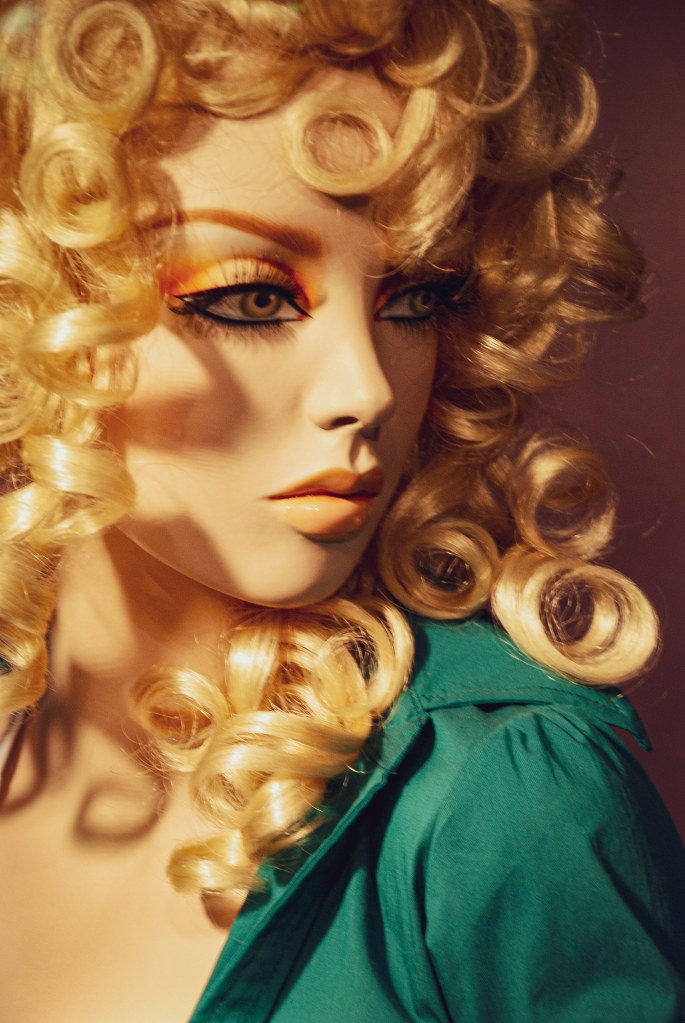
In a shed
behind a boat

a giraffe hugs

a mannequin

in lingerie.

She’s taped up

like hope

with no follow-through.

Left breast: duct tape.

Right breast: same.

They appear

to be having

a moment.

One arm raised,

one finger pointing—

at what?

Nobody knows.

Maybe God.

Maybe the fuse box.

You cannot

roller skate

in a buffalo herd.

But you can

make eye contact

with a fiberglass giraffe

and feel

understood.

Do giraffes

recognize mirth?

If so,

they hide their tell.

Too much thinking

chokes the magic.

Too much seriousness

snaps the string.

Let it be—

and the surreal settles

like a memory

of an almost familiar song.

Just look.

Don’t ask.

Sit still.

Don’t name it.

Don’t fix it.

Just—

watch.

People want meaning.

They want cause

and effect,

a punchline

with timing.

But not everything

needs to resolve.

A mannequin.

A giraffe.

Some duct tape.

And the question:

Do giraffes recognize mirth?

Or are they simply better

at not needing to?

Sense arrives late

and ruins the view.

You cannot

roller skate

in a buffalo herd.

But here,

you can listen

to plastic silence,

witness

unorthodox congeniality,

and know,

without knowing,

that stillness lives

in the unsolved.

Porter Lake, Maine
 Boho Dreams of Space and Time