Pull of an Empty Tide

The bed sagged like a cracked raft,

smelling of rust, salt, and lost time.

The other side was hollowed out,

a dent where someone used to dream.

The air bent yellow at the edges.

A radio somewhere cracked and whined —

low country and western misery,

a voice leaking out about someone who never came home.

The floor leaned west,
always west,

because that's where things go
when they’re too tired to fight.

The clock on the wall had stopped
sometime last night,

but no one noticed,
not even the dark.

The sea dragged the dead nets,
and the chain inside the walls,
hummed low
against the bones of the room.

It ran through my empty wallet,

through my cracked teeth,

through the long thin cigarettes
burning themselves out.

It rattled whenever I breathed too hard.

The motel bible sat open on the nightstand,

a page torn loose,

a note scrawled in blue ink:

"don’t wait for me."

I tasted rust,

saw the green of rotting rope,

felt the floorboards creak
with a tired red sadness.

White gulls circled low,
no purpose left;
their shadows vanish
into the sea’s forgetting.

I thought about standing up,
walking toward the window,
singing along
with the sad broken radio.

I didn’t move.
The tide had already
taken everything.


Ocean Cay, Atlantic Ocean

Shadow Rattles

Shadow rattles through dreams

of a non-trivial world—

a lattice of wires and heat exchange,

ragtime pulsing beneath

the tireless rhythm

of rails and ties.

Through this windowed trespass

of industrial apprehension,

we pass ductwork like iron lungs,

humming with function,

resigned to necessity.

We ride inoculated, immune

by the promise of arrival,

fleeing once again

the rust-backed burden,

the redbrick breath

of imposition.

Bridgeport, Connecticut

At the End of the Pier

Clouds move

like thoughts—

shapeless, then clear,

then gone.

The wood beneath me

leans and softens.

A crab—small, rust-red—

clicks past

without meaning.

They say

the notion of emptiness

was understood here once.

No sermon.

No symbol.

Just the tide

covering what it could.

Not loss.

Not absence.

But space

for the self

to rise—

shadow and light

together.

The sea

keeps no stories.

It lifts,

it leaves.
I sit,

and let it.

Peaks Island, Maine

Love, Karma

She came through the lobby

in heels that sounded like secrets,

dragging a suitcase
that probably held regrets

neatly folded

next to a book of spells.

The clerk said she had

that look—
like she’d once been painted

on the side of a bomber plane,

or whispered about

in backseats and divorce papers.

They gave her Room 237,

because of course they did.

Where else would a woman like that stay

but down the hallway

that never quite ends?

She ordered champagne at midnight,

left no tip,

and signed the bill

“Love, Karma.”

Some say she rewrote dreams.

Others, that she stole them.

Mostly, she just waited—

watching time melt down the window

like candle wax.

Men dropped around her
like poker chips at a rigged table,
grinning through the gamble,
and left with their names

misspelled in the mirror.

When the flowers stopped

and the world got bored

of her perfume and promise,

she slipped into the velvet-lined box

beneath the lobby gift shop,

a mannequin saint

with sale tags on her sins

and a crucifix worn

like costume jewelry.

Now tourists lean in,

take photos,

whisper,

"Wasn’t she someone?"

And somewhere—

behind the front desk,

or in the static of the lobby jazz—

the universe clears its throat,

adjusts its tie,

and laughs,

quietly,

into its infinite hand.

Scarborough, Maine

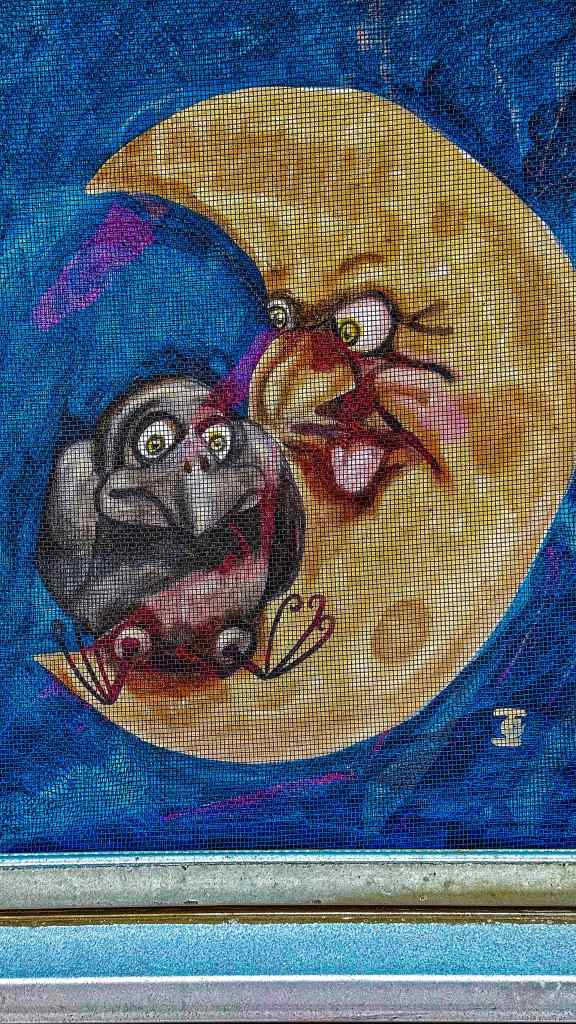
Lunacy Lessons

1.
The moon said:
“Your shadow has been impersonating you.”

The crow cocked his head,
pecked once at his feet,
and stared behind himself
like betrayal might be hiding
just past the tail feathers.

2.
The moon said:
“I watched you steal fire from a god
then choke on the smoke.”

The crow flared his wings,
feathers bristling like broken knives.
He remembered that sky—
the burning alphabet,
the gods cursing in reverse,
the ash that clung to his beak
for a thousand silent winters.

3.
The moon said:
“Worms dream louder than birds.”

The crow blinked hard,
his eyes fogged over
like windshields in winter,
and he let out a caw
that sounded more like a question
than a cry.

4.
The moon said:
“The sky is a lid. You’re inside the jar.”

The crow twitched.
One wing spasmed,
his claws tightened on the crescent—
clutching not for balance,
but for the memory of escape.

5.
The moon said:
“You were never born.
You’ve just been very committed to the act.”

The crow went still.
His pupils dilated into voids.
He opened his beak,
but nothing came out.
Even silence abandoned him.

6.
The moon said:
“You’ve been flying in circles
because you’re the message, not the messenger.”

The crow froze.
No blink. No twitch.
As if time had taken a breath.

Inside his bones
a black wind stirred—
the old hunger,
the laughing void
that once tore language from the sky
and fed him its feathers.

He did not speak.
He did not move.
He simply fell inward—
like a stone into still water—
and from somewhere deeper than flight,
he heard it:

Everything you were waiting for
was you.

Peaks Island, Maine

Seven of Cups

They were Georgia Boots,
Comfort Core.
No comfort left.
Soles gone to hell,
inlay peeled like burnt skin
on a long drunk  summer.

He used to wear ’em
to the docks—
not for the job
just to look like he had one.
Said the boots gave him posture
even when he had none.

The bench was his confessional.
“Seven cups,” he muttered,
“they all looked good
in the morning fog.”

Money.
A woman who called him “baby.”
A trailer with a flag, a fridge
full of cheap beer.
A crappy transistor radio
always tuned to the same static.
He liked the noise more than silence—
silence reminded him
of his old man’s fists
and the day he slammed the door
and never came back.

She came like the others—
eyes like storm warnings,
barefoot in winter,
mouth full of someone else’s song.
He loved her
like a fire:
too close,
too long,
burned down to bone.

Every choice-
a ghost
that kissed his cheek
and walked off with his wallet.

He died right there,
on the bench that knew his weight,
where the pigeons ignored him
and the cops didn’t bother.

Boots side by side,
one insole flopped out
like a tired tongue,
a half-smoked cigarette still warm
in the groove of the slats.
No note. No name.
Just a man 

who kept picking
the wrong cup.

Portland, Maine

NOTE:
I carry my camera with me wherever I go. One day, after photographing a pair of abandoned, laceless boots, I began to wonder who might have left them behind and what his story could be. In a moment of synchronicity, the tarot card I pulled that day was the Seven of Cups—a card associated with choices, illusions, desires, and the tension between fantasy and reality.

Try a Little Tenderness


The wolf should've snapped her neck.
The deer should've bolted.
hat's the law, right?
Kill or run.
How it's supposed to be.
How it always was.

But here they are -
him in a secondhand suit
smelling like old rain and bad decisions,
her draped in a dress made of soft mistakes.

He's thinking,
another kill won't fix the hunger.
She's thinking,
another escape won't fix the fear.

And outside the glass,
the world hums along,
hungry for blood,
hungry for failure,
hungry for the beautiful ruin of it all.

They lean into each other
like broken doors swinging on the last hinge,
not lovers,
not saviors,
just two things too tired to keep lying.

The world wants them to hate,
to run,
to tear each other apart.

What they do instead -
this slow, brutal, stupid tenderness -
is the worst kind of rebellion.

The glass between them and the street
is spidered with cracks -
each one a little white lie the world told,
each one a rule they broke.

He's melting at the edges now,
becoming a man, becoming a memory,
becoming something the wolf was never meant to be.

She shimmers,
not prey anymore,
not even real maybe,
just some miracle walking
through the wreckage.

Sirens smear across the sky,
time drips down the walls,
and still they sit -
choosing each other in a world that stopped believing.

This is what survival looks like sometimes:
not teeth,
not speed,
but a hand on a shoulder,
a weight leaned into,
a promise made with nothing but breath.

and they sit shoulder to shoulder,
defying the ugly machines that built them,
trading the last thing that matters:
the stupid, beautiful, suicidal act
of choosing tenderness
when nothing else makes sense.


Lenox, Massachusetts